
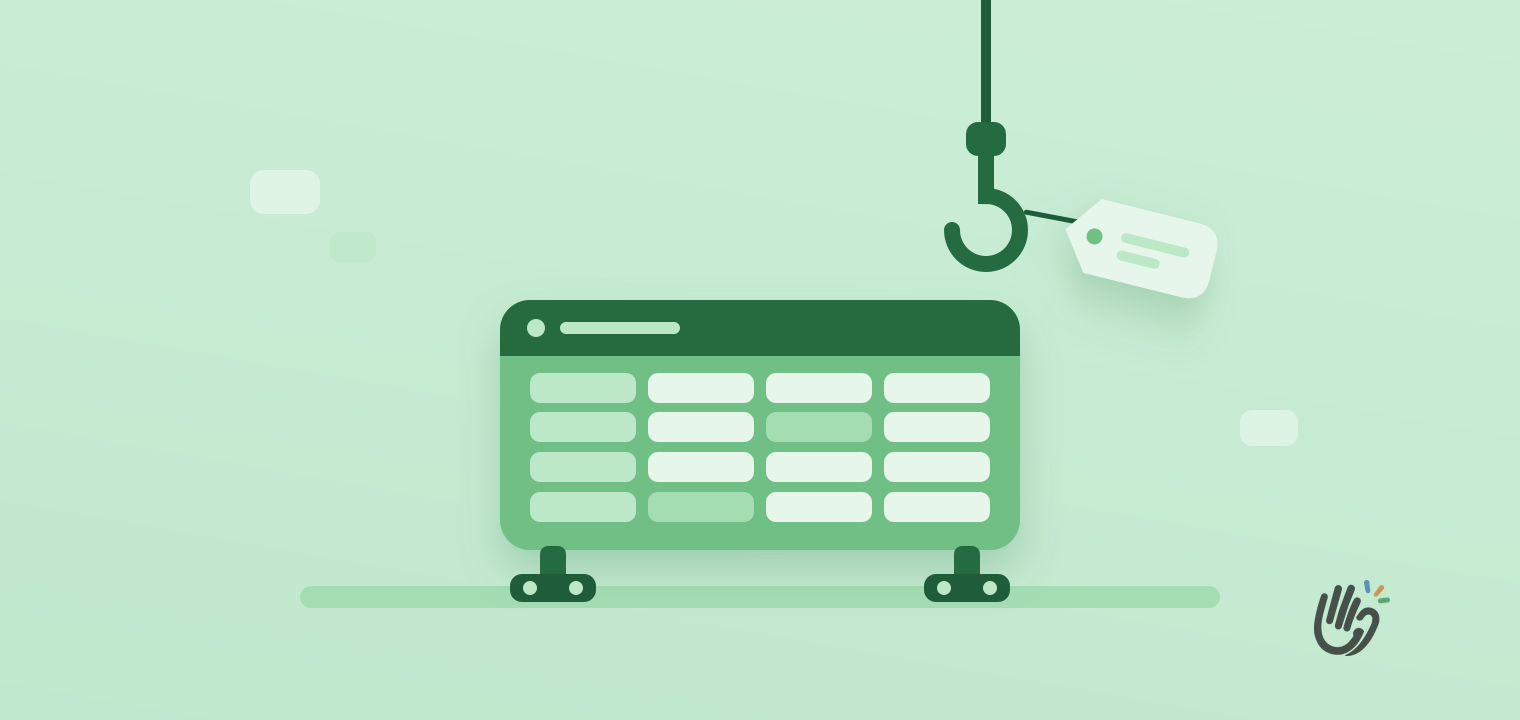
Every small company has one spreadsheet that quietly became the business. It started as a list of leads or orders, someone added a status column and a few linked records, and three years later the inventory, the hiring pipeline and the content calendar all live in one Airtable base that nobody would dare to move. That base is rented. The rent has been steady and the product has been good, and since September 4, the landlord is a different company.
Bending Spoons closed its purchase of Airtable that day, for about one point three billion dollars. On October 12 it said it was laying off a large part of the team that built it.
What happened to Airtable
The deal was announced on August 4 and was Bending Spoons' first acquisition since it listed on Nasdaq. Airtable says more than 500,000 organizations use it. The October cuts came about five weeks after the deal closed, and the company said it would reorganize around smaller teams. Neither side has published a number. Airtable told customers that plans, prices and service will not change, and right now that is true: Team is $20 per seat a month and Business is $45 per seat a month, both billed yearly (checked Oct 23, 2026).
The reason people are nervous anyway is the buyer's track record. Bending Spoons has bought Evernote, WeTransfer, Meetup, Vimeo and a long list of other apps people grew up with. At WeTransfer, its CEO confirmed plans to cut three quarters of the staff. Nobody is saying Airtable's price goes up next week. The point is simpler. When your company's operations live in a hosted base, the people who decide what happens to it next are the people who own the host, and that can change on a Tuesday.
The risk with a rented database is not today's price. It is that the company holding your tables can be bought, and you are part of what gets bought.
The open source Airtable alternatives
There is a whole shelf of tools that rebuild the Airtable idea (a spreadsheet on the outside, a real database on the inside) and publish the code. They are not identical, and the biggest difference between them is one most roundups skip: the licence. Here is what each one ships under, read from its own repository today.
| Tool | Licence | GitHub stars | Latest release |
|---|---|---|---|
| Baserow | MIT (open source edition) | about 6,200 | 2.4.1, Oct 13 |
| Grist | Apache-2.0 | about 12,000 | 1.7.21, Oct 9 |
| Teable | AGPL-3.0 (core apps) | about 22,000 | Oct 23 |
| NocoDB | Sustainable Use License | about 65,000 | 2026.09.1, Sep 29 |
Baserow is the closest to a straight swap. Its open source edition is MIT, the most permissive licence on this list, with premium and enterprise features kept in separate folders under their own terms (repo). The README calls it “Headless and API first,” and self-hosting is one Docker command.
Grist is the spreadsheet person's pick. It describes itself as “a modern relational spreadsheet,” its formulas are written in Python, and it is Apache-2.0 (repo). Two French government digital agencies are credited in the README with significant contributions to the code, which is about as strong a sign of “this will still be here” as open source gets.
Teable is the newest of the four and the fastest moving: it pushed a release this morning. It puts the grid on top of a real Postgres database, says it handles millions of rows, and keeps its core under AGPL-3.0 with AI and enterprise features behind a paid licence key (repo).
NocoDB is the famous one, with by far the most stars, and its GitHub tagline still reads “A Free & Self-hostable Airtable Alternative.” Read the licence before you plan around it. Its licence file, last updated January 29, 2026, puts the code under the Sustainable Use License, which allows use “for your own internal business purposes” but is source-available, not open source in the usual sense (repo). For most internal use that is fine. If you want to build a product on top of it, it matters.
It is a wave, not one app
The shelf is longer than four. Mathesar is GPL-3.0 with about five thousand stars and puts a spreadsheet face on a Postgres database you already have. NocoBase, with about twenty-five thousand stars, goes further toward building whole internal apps without code. One project has already folded into another: Undb archived its repository with a one-line note saying it moved to Teable. That is the open source version of an acquisition, and the difference is worth noticing. The old code is still there, under its old licence, for anyone who wants to keep running it.
What you actually take on
Airtable earns its price, and it is worth being honest about how. Its interface is the most polished in the category, its automations and integrations are deep, and someone else keeps it running, backed up and patched at 2am. A non-technical team can build a working system in an afternoon, and that is the real product. None of the tools above match all of it, and the ones that come close save the AI and enterprise extras for their paid plans.
Self-hosting a database your business runs on is also a bigger commitment than self-hosting a blog. You need backups you have actually restored, updates that get applied, and a person who knows what to do when the server fills up. If that sounds like a lot, every tool here sells a hosted cloud version too, and that is the sensible middle: open code you can take home if the vendor changes, run by someone whose job it is today.
- 1Does one shared base hold something your business cannot run without?
- 2Is someone on your team comfortable running a small server and testing its backups?
- 3Do you mostly use grids, forms and linked records rather than heavy automations?
- 4Does it matter to you that the licence lets you keep running the code whoever owns the company?
This series has been walking down a hallway of paid-app doors: dictation and meeting notes, the deploy platform and the inbox, the CRM, the login at the front of the house, the mailbox, the visitor book. This door is the back office, the room with the spreadsheet everybody depends on, and nothing about it got worse this month. It just changed hands, and that is the moment to notice that you never held the key. We keep writing these at AppClap because a search for software should put the tool you can own on the same page as the famous one. Our Airtable alternatives page lists what we track, or describe it the way you would to a colleague: a spreadsheet database like Airtable that I can host myself. It is worth thirty seconds on the question underneath all of this. Do you want your tables to be part of somebody's next deal, or part of yours?